Trying paced bottle feeding but finding the upright position doesn’t quite work for your baby? Side-lying paced bottle feeding gives you another option.
Some babies need a little more body support during feeds. You might also find that holding your baby upright feels awkward or uncomfortable for you.
In this blog, I’ll walk you through how to pace a bottle feed with your baby on their side and show you three different ways to hold them, so you can explore what works best for both of you.
If paced bottle feeding is new to you, my paced bottle feeding guide explains how to manage milk flow, offer pauses, and follow your baby’s cues. Those same ideas apply when feeding in a side-lying position.
What Is Side-Lying Paced Bottle Feeding?
Side-lying paced bottle feeding is a variation of paced bottle feeding, where you hold your baby on their side with their head higher than their hips, rather than upright. You’re still watching their cues and giving them time to pause—the main difference is how you support their body.
That extra support can be helpful for babies who were born early, have low muscle tone, or find coordinating feeding challenging.
It’s kind of like trying to eat a long meal while sitting on a stool without a back or footrest. You’d probably get the food into your mouth, but just staying balanced would make the whole experience harder.
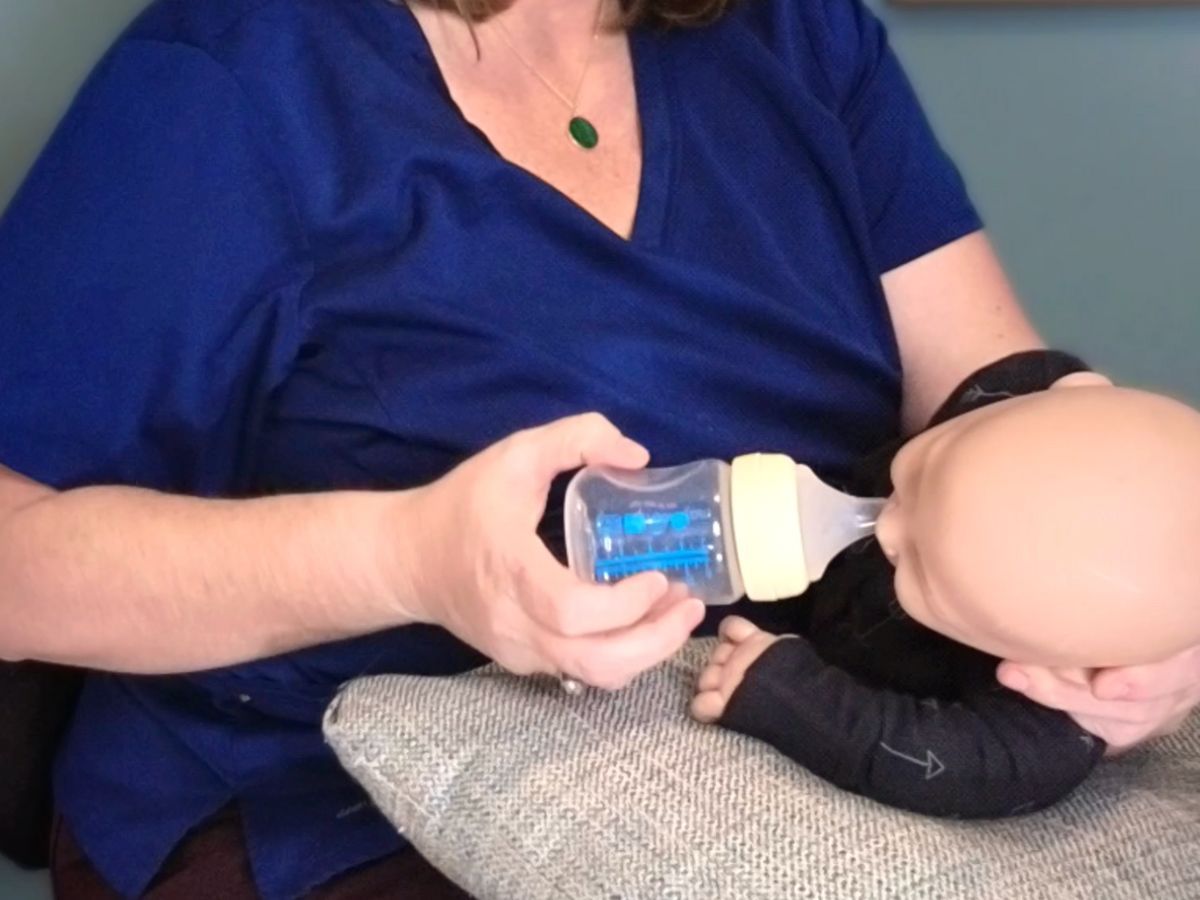
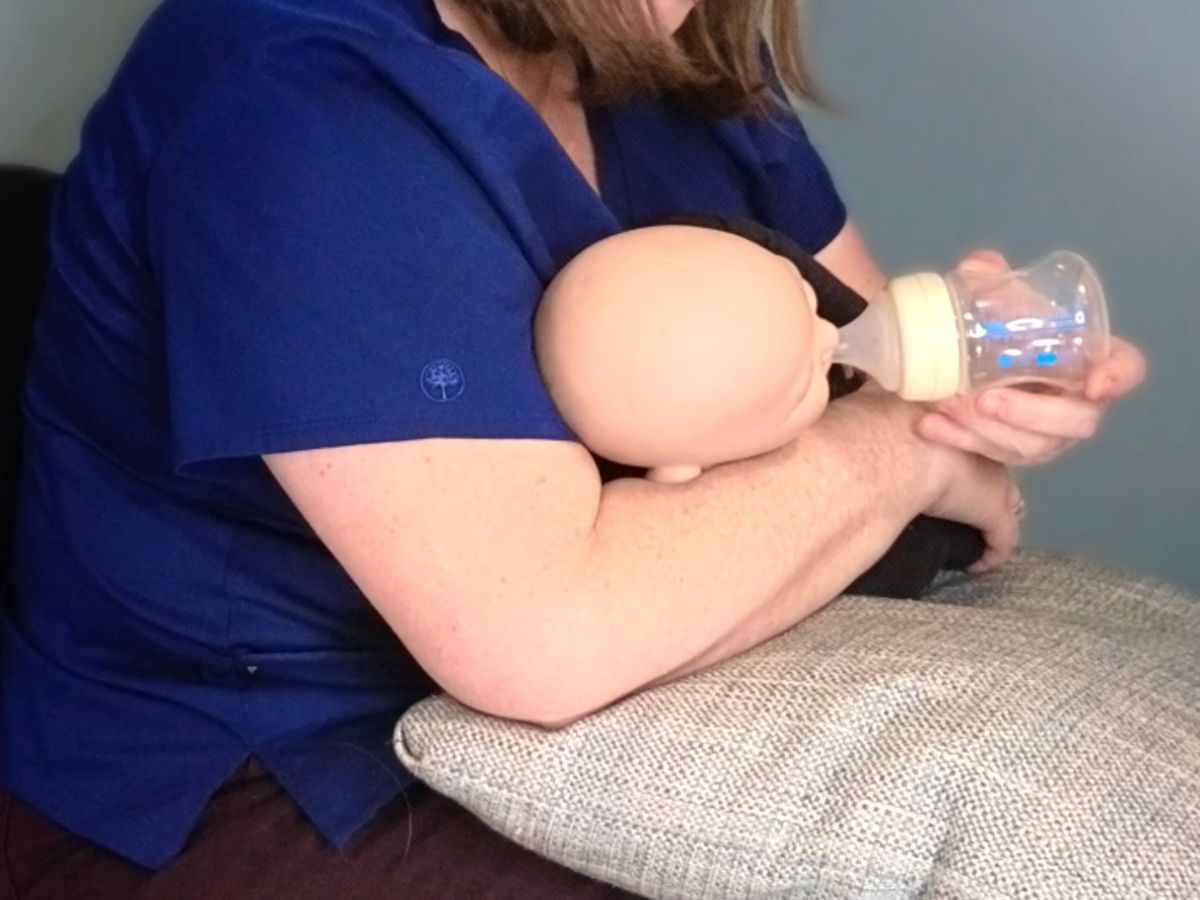
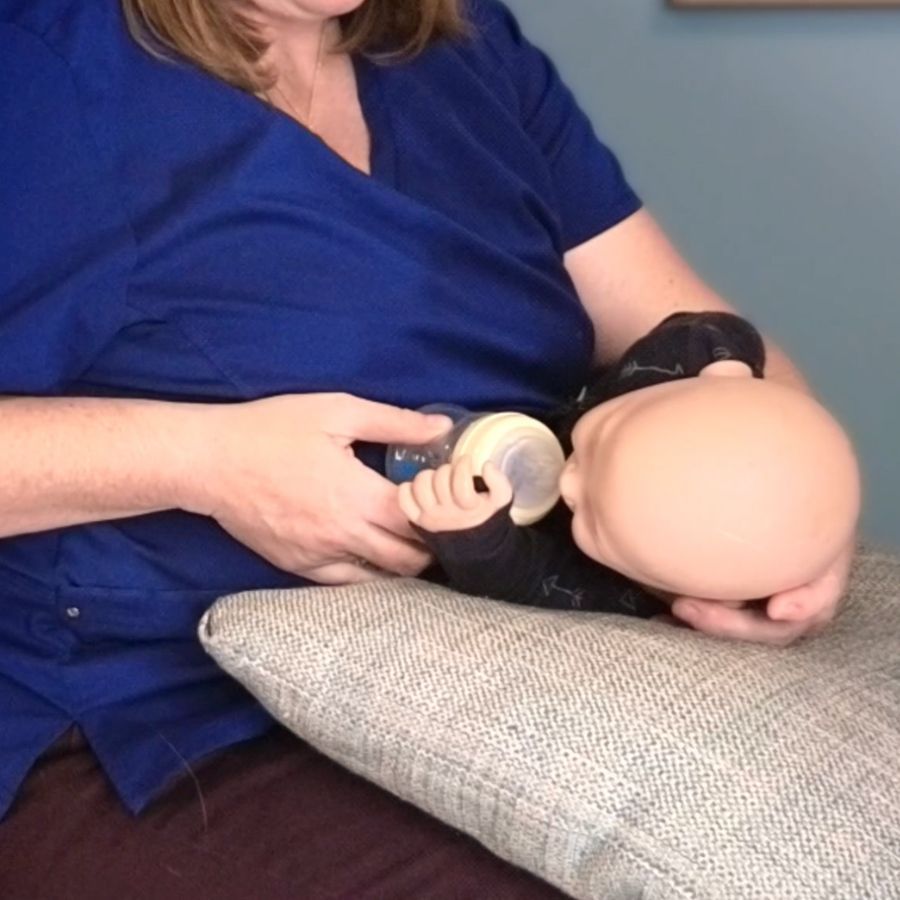
My three favorite side-lying positions are snuggled in close facing you, angled away while still facing you, and snuggled in facing away. Here’s what those can look like.
Traditional Bottle Feeding
Upright Paced Feeding
Facing You Close In
Angled Back
Facing Away
```html
Choosing Side-Lying Positions
You don’t have to choose one position and use it for every feed. Try the options below and notice what feels comfortable for you and helps your baby feed more easily.
If your baby repeatedly coughs, chokes, leaks milk, or struggles to stay attached, those observations deserve attention. A different position may help, but it’s also worth getting support to understand what’s making feeding difficult.
Facing You, Snuggled In
Your baby rests on their side, facing you and snuggled close to your body. This gives you a clear view of their face so you can watch their cues and connect during the feed.
The close positioning can feel crowded with a larger bottle. If your wrist feels bent or uncomfortable, try giving yourself a little more space.
Facing You, Angled Back
Your baby still faces you, but their body is angled slightly away from yours instead of tucked in close. This creates more room for the bottle and may let you keep your wrist straighter.
Keep supporting their whole body as you adjust the position, with their head higher than their hips and their head, neck, and body in line.
Facing Away From You
Your baby rests on their side across your arms, with their back against your body, while you offer the bottle with your opposite hand. This gives them close body contact and support.
Their face can be harder to see in this position. Adjust your hold so you can still watch their breathing and notice when they need a pause.
Small Adjustments to Try in Any Position
Give your baby’s feet somewhere to rest, such as against your arm or body, without pushing their legs into position.
You can also alternate sides between feeds. You may find one side feels easier for you. If your baby consistently struggles when facing one direction, share that observation with someone helping you with feeding.
```
How to Pace Bottle Feed in a Side-Lying Position
The pacing technique stays the same no matter what postion you use. The only difference is how you position your baby. You’ll still place them on their side, keep the bottle parallel to the ground, and pause regularly during the feed.
Get your baby into a side-lying position.
Pick whatever position feels most comfortable and place your baby on a large pillow or cushion for support.
Keep the bottle parallel to the ground
Hold the bottle as parallel to the ground as possible, tilting only if needed to help your baby finish the bottle at the end.
Give your baby intentional pauses while feeding.
Gently twist to remove the nipple from your baby’s mouth, rest it on their lips for a few seconds, and then offer it again.
When Pacing the Feed
The pacing part stays the same whether your baby is upright or on their side. Watch their sucking, swallowing, and breathing, and give them time to pause.
Let your baby’s cues guide the rhythm rather than following a fixed number of sucks. If they seem rushed or overwhelmed by the milk flow, lower the bottle to stop the flow or gently remove the nipple. Give them time to breathe and settle before offering it again.
You can also use this position for skin-to-skin contact. With your baby in their diaper, hold them against your bare chest while keeping their body supported and their face clear. Feeding can be a time for connection as well as getting the milk they need.
asdasdf
Let Your Baby’s Feeding Guide Your Next Step
As you try side-lying, notice what changes. Is your baby staying attached more easily? Taking comfortable pauses? Does feeding feel easier for both of you? Those observations help you figure out what’s working and what still needs attention.
If your baby keeps slipping off, leaking milk, or struggling to stay attached, take a closer look at what their bottle latch can tell you. If you’re hearing clicking, my post on clicking during bottle feeding explains what that sound may mean and what to explore next.
And if feeding still feels difficult, you don’t have to keep figuring it out alone. Even if you’ve been told everything looks fine, you can ask for another look. You don’t need to know exactly what’s wrong to describe what you’re seeing and ask for help.
Want More Support?
If this blog was helpful, here are a few related resources you might like.
🔒 Expanded Access includes step-by-step videos and resources that go beyond the blog to help you understand and work through common feeding challenges.
Frequently Asked Questions About Side-Lying Paced Bottle Feeding
Side-lying describes how you hold your baby. Pacing describes how you manage the milk flow and give your baby time to pause. You can pace a bottle feed with your baby upright or in an elevated side-lying position.
In either position, you’re watching your baby’s cues and responding to what they need. My paced bottle feeding guide walks through those basics.
Notice what changes with the position. Can your baby stay attached more easily, manage the milk comfortably, and pause to breathe? Does their body seem more settled? Your comfort matters, too.
If they still slip off, leak milk, or struggle to stay attached, the position may be only part of the picture. This guide to what your baby’s bottle latch can tell you can help you look more closely.
No. Hold your baby on their side with their head higher than their hips. Keep their head, neck, and body in line, rather than lying them on their back and turning only their head toward the bottle.
Continue holding your baby and the bottle throughout the feed. A pillow on your lap can support your arms, but it doesn’t replace your support or supervision. Keep your baby’s face clear and their chin from being tucked against their chest.
You don’t need to follow a fixed count for every baby. Watch their sucking, swallowing, and breathing, and allow their natural pauses. If they need help taking a break, lower the bottle to stop the milk flow or gently remove the nipple.
Give them time to breathe and settle before offering it again. If your baby’s feeding team has given you a specific pacing plan, follow that guidance.
Changing position doesn’t automatically mean you need a different bottle. Start by noticing how your baby manages the bottle you already have.
If staying attached or handling the flow is still difficult, my bottle-selection guide can help you think through nipple shape and flow together.
A preferred position alone doesn’t tell you something is wrong. But if other positions consistently bring coughing, distress, or difficulty staying attached, that difference is useful information to share with your baby’s healthcare or feeding team.
Repeated coughing or choking deserves a feeding assessment, even if side-lying seems to help. You don’t have to know the cause before asking someone to take a closer look.
About the Expert Avery Young, IBCLC, is an International Board Certified Lactation Consultant who has spent more than a decade helping parents and professionals understand their baby’s reflexes, build confidence, and make latching and feeding feel better. Read more about Avery →
If feeding feels confusing, inconsistent, or harder than it should, you don’t have to navigate next steps on your own.
Expanded Access offers deeper answers, real examples with real babies, and ongoing support to help you make sense of latching challenges — with answers available when you need them.