How Much Milk Is My Breastfed Baby Getting? Weighted Feed Explained.
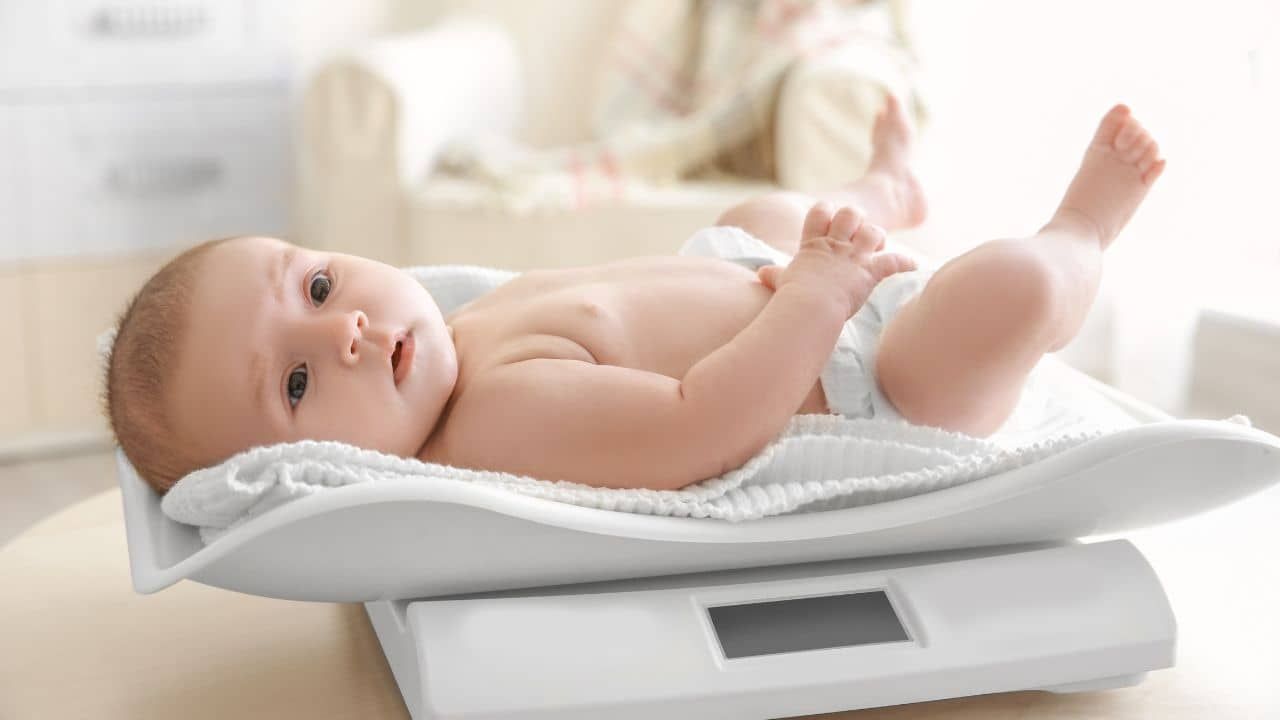
One of the hardest parts of breastfeeding is that you can’t actually see how much milk your baby is taking in.
With a bottle, you can measure ounces. With nursing, you’re left guessing — and that guessing can turn into anxiety fast, especially if your baby’s weight gain is being questioned.
So in this post, we’re going to talk about how to estimate milk intake while breastfeeding, how a weighted feed works, and how to interpret the numbers without spiraling.
Let’s start with the truth that nobody says out loud enough:
If you are breastfeeding, you do not automatically know how much milk your baby is getting.
And if that makes you feel anxious, you are not being dramatic. You are being a parent who wants to understand what’s happening.
The problem is that breastfeeding doesn’t come with built-in measurements. You can’t see ounces. You can’t see “how much is left.” You can’t see the total intake the way you can with a bottle.
So the goal of this post is not to turn feeding your baby into a math obsession.
The goal is to help you understand what your baby is capable of — and whether the overall intake picture makes sense.
Overall Milk Intake Matters, Not A Single Feed
This is the part most breastfeeding/chestfeeding parents don’t hear early enough:
Milk intake is supposed to vary.
- Some feeds are short.
- Some feeds are big meals.
- Some feeds are more about comfort.
- Some feeds are “I’m half asleep but I want to latch anyway” feeds.
So if you’ve ever had a feed that felt short and immediately panicked that your baby didn’t get enough — I want you to know:
No single feed determines your baby’s growth, and variation is biologically normal.
One feed is just a single data point. It can give you information about what’s possible for your baby.
It doesn’t tell you how much your baby takes in at every single feed.
Growth is not determined by any one nursing session.
Growth happens based on intake over time.
And that’s actually good news, because it means you don’t have to obsess over every single feeding.
Instead, we can zoom out and ask a much better question:
Does the overall intake pattern make sense?
Because growth is not a mystery. It’s math.
Volume × Frequency = Total Intake
And total intake is what drives weight gain.
This is why two different babies can have completely different feeding styles and still thrive:
- Some babies take larger feeds less often.
- Some babies take smaller feeds more often.
Both can be normal.
But if weight gain is slow, we need to know whether the math is working.
What Is a Weighted Feed (and Why Does It Matter)?
A weighted feed is one of the most accurate ways to estimate how much milk your baby is taking in while breastfeeding.
It works like this:
- You weigh your baby before a feed.
- You nurse normally.
- You weigh your baby again after the feed.
The difference in weight is their intake for that feed.
That’s it.
And yes — this is something lactation professionals use all the time, because it gives real information about milk transfer.
But I want to be very clear about something:
Weighted feeds are not necessary for everyone.
If your baby is gaining weight well, tracking their growth curve, seems content after feeding, and is able to go 1–3 hours before showing hunger cues again… a weighted feed is usually not needed at all.
For many babies, their feeding patterns, diaper output, and weight gain over time already give us plenty of reassurance that breastfeeding is going exactly the way it should.
(If you want help understanding those signs, I have a blog about that right here.)
But if your baby isn’t gaining weight appropriately, a weighted feed can be incredibly useful — because it gives us a clearer estimate of how much your baby is actually getting during a typical feed.
And once we have that information, we can make a closer estimate of how much additional supplementation might be needed.
That’s why weighted feeds are considered a clinical tool.
They help us get a better understanding of how much a baby is taking in during one feed so we can make a smarter estimate of overall intake.
And if we do need to supplement, weighted feeds can help us adjust that plan based on your baby’s feeding skills — instead of guessing.
Then the scale over time — your baby’s weight trend — tells us whether the plan is working.
The scale isn’t there to make you panic.
The scale is there to give you clarity.
Weighted feeds can help answer questions like:
- Is my baby transferring milk efficiently?
- Is my baby capable of taking in a full feed?
- Is intake likely the reason weight gain is slow?
This matters because a lot of parents are told their baby “just needs more calories” without anyone actually measuring how much milk the baby is taking in.
And without intake information, it’s impossible to know whether the problem is calories… or volume.
How to Measure How Much Milk Your Baby Gets While Nursing
If you want to do a weighted feed at home, here’s how to do it correctly.
- Use a baby scale. A normal bathroom scale is not sensitive enough to detect small changes.
- Weigh your baby before feeding. Ideally start with a clean diaper, and keep clothing consistent.
- Nurse like you normally would. Don’t “perform.” Don’t force extra time. We want real-life data.
- Weigh your baby immediately after feeding. Do not change the diaper in between.
The difference in weight is your baby’s intake for that feed.
No matter what unit your scale uses (grams, kilograms, pounds, or ounces), the basic concept is the same:
The amount of milk your baby takes in is roughly equivalent to the amount of weight they gain during that feed.
And the reason this works is simple: breast milk has weight.
In the metric system, 1 mL of milk weighs approximately 1 gram.
So when your baby drinks milk, that milk stays inside their body — which means the scale reads higher after the feeding.
That’s why a weighted feed can give you a very good estimate of intake, as long as you keep everything else consistent.
The key is that you can’t change anything between weigh-ins.
- Don’t change the diaper
- Don’t change clothes
- Don’t add or remove blankets
And just to be extra clear: once you start feeding, you don’t want to take the diaper off.
If your baby pees or poops during the feed, that can throw off the measurement — but the biggest issue is changing the diaper mid-session.
If you start with a diaper that isn’t perfectly clean, that’s okay.
As long as you don’t change the diaper during the feed, everything is still contained — and your before-and-after comparison can still be useful.
If you forget and change the diaper anyway, it doesn’t mean you did anything wrong.
It just means that weighted feed won’t be accurate.
Just try again another time.
One more thing to keep in mind: unless your scale is a professional model, it won’t be perfectly precise.
Many home scales round to the nearest ounce (or the nearest 10–20 mL). That’s okay.
Again, you’re not chasing an exact number. You’re looking for a realistic sense of what your baby usually takes in — and whether most feeds are landing in an expected range.
One Weighted Feed Does Not Tell You the Whole Story
This is the part that matters most:
One weighted feed does not tell you the whole story.
It is not a pass/fail test.
It is not a reason to panic.
It is simply information about that feed.
Milk intake changes throughout the day.
Your baby’s appetite changes.
Their energy changes. Your letdown changes. Your supply fluctuates.
Your baby’s feeding efficiency can vary.
So if you truly want to understand your baby’s intake while nursing, you need more than one data point.
You need several weighted feeds, at different times of day.
Because the goal is not to obsess over ounces.
The goal is to understand the pattern — and to understand whether the math works.
Most babies tend to cap out somewhere around 2–4 ounces per feed.
Some babies take more. Some babies take less.
But if your baby consistently takes in smaller feeds, that doesn’t automatically mean something is wrong.
It simply means they will need to feed more frequently to meet their daily intake needs.
Again:
Volume × Frequency = Total Intake
That’s the equation.
That’s how growth works.
And this is why measuring intake should always be done in context — not to make you panic over every feed, but to understand what your baby is capable of and whether the overall feeding picture makes sense.
And if the math doesn’t work?
That’s not a reason to blame your body.
That’s a reason to get support from a professional who can help you figure out why — and help you build a plan that works for your baby and your goals.
What About New Devices That Claim to Measure Breastfeeding Intake?
This is also a timely topic because there are now newer devices being developed that claim to estimate milk intake while breastfeeding.
And honestly?
That’s exciting.
Families deserve better tools.
I understand why the concept is so compelling. When you’re worried about weight gain, it makes complete sense to want something that gives you a number you can trust.
But even with new technology, the same truth still applies:
Numbers without context can create panic.
Because it’s very easy to stop watching your baby… and start watching the device.
And if you don’t understand how much intake naturally varies from feed to feed, you can end up spiraling over data that is actually completely normal.
So if you use one of these devices, use it the same way you would use a weighted feed:
As information — not as a judgment.
One feed does not define your baby’s growth.
One day does not define your baby’s growth.
What matters is intake over time, weight trends over time, and whether your baby is staying on their growth curve.
Like any tool, these devices may be helpful in the right situation.
But they can also create just as much anxiety if you don’t have the right context to interpret what you’re seeing.
The Takeaway
If you are breastfeeding and you feel anxious because you don’t know how much your baby is getting, I want you to know that your concern makes sense.
Breastfeeding doesn’t come with measurement tools built in.
But you do have options for gathering real information.
And if your baby is gaining weight well?
You probably don’t need to weigh your baby at all.
For many babies, their feeding patterns, diaper output, and growth over time give us plenty of reassurance that breastfeeding is going exactly the way it should.
But if weight gain is a concern, weighted feeds can be a really useful tool — because they help us estimate intake more accurately and make smarter decisions about what your baby might need next.
- A weighted feed can tell you how much milk your baby took in during one feeding.
- But one feed is only a data point — intake changes throughout the day.
- Growth is math: volume × frequency = total intake.
- If the math doesn’t work, the next step is understanding why — not blaming your body.
This is not about panic.
This is about clarity.
And clarity helps everything feel better.
Want More Support?
If this blog was helpful, here are a few related posts you might like.
➜ How Much Breastmilk Does My Baby Need Per Day?
➜Signs Your Breastfed Baby Is Getting Enough Milk
➜ How to Get a Good Latch (Step-by-Step)
🔒 Expanded Access resources go deeper to help you solve your latching and feeding problems. Click here to learn more about what's inside.
Frequently Asked Questions